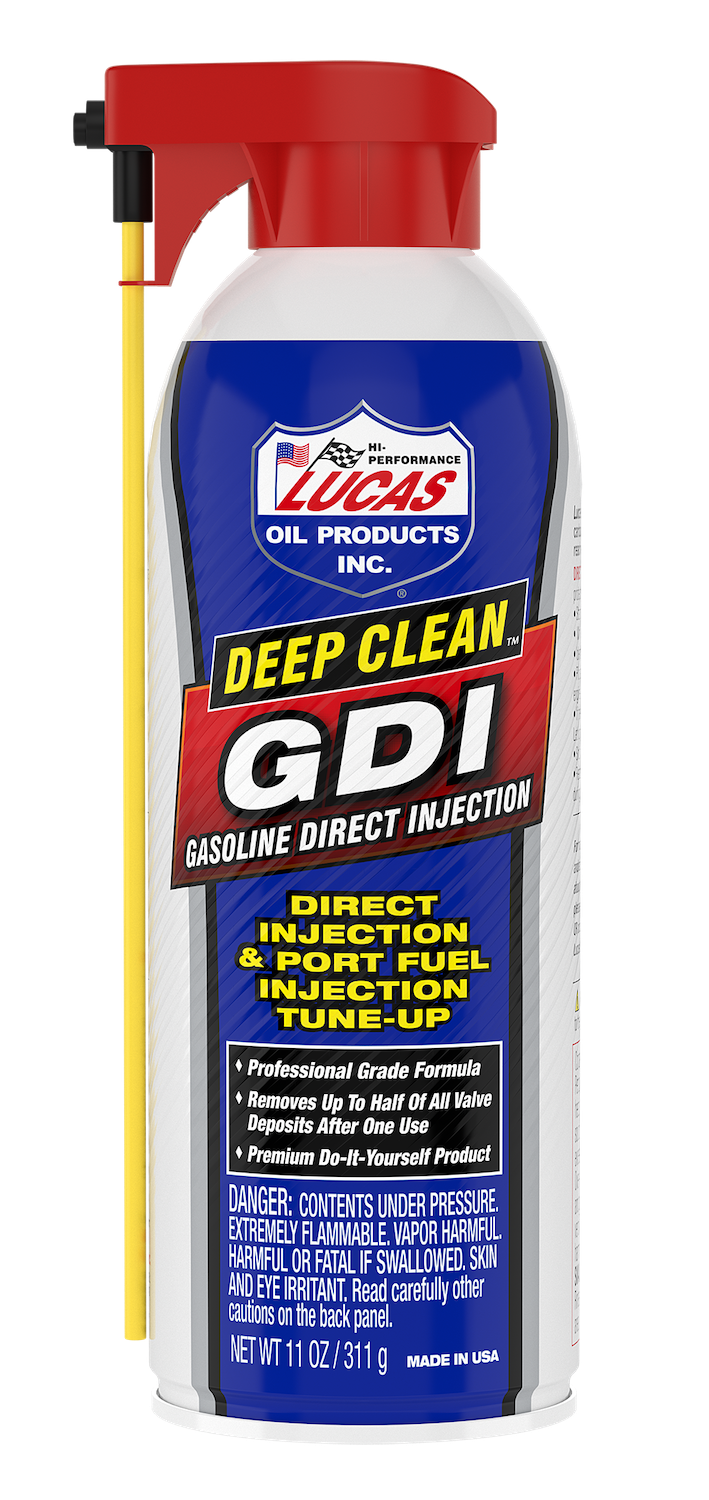
Dirty engines have always been a problem, whether it's fuel system deposits, grime in the intake manifold, intake valve deposits (IVD),
or carbon build-up in the combustion chamber. Dirty engines just don't run as well as clean engines. Why is it that there seems to be so much more talk about it today? The answer to that question is complicated and doesn't rest on a single cause, but one major change has been the method of fuel delivery.
In the \"old days\" cars had carburetors. Fuel was blended with air in the carburetor and traveled together the length of the intake manifold into the engine through the intake valves. In the 1980's carburetors were largely replaced with port fuel injection systems where gasoline was sprayed sequentially into each cylinder by injectors mounted in the intake manifold with the fuel spray aimed at the back side of each intake valve. In recent years a new method of fuel delivery is replacing port fuel injection. It is known by various names, but probably most commonly by Gasoline Direct Injection, or GDI for short. In this system the injector has moved from the intake manifold to the cylinder head. These are much higher-pressure systems with shorter injection intervals and more sophisticated computer control, but the thing most noteworthy is that the intake valves are no longer receiving the fuel spray; the fuel is being directly injected into the combustion chamber. This change has resulted in better fuel economy and more power, but there have been problems too. Probably the biggest problem is that the deposits that form on the intake valves are no longer being sprayed
by fuel, so not only do they tend to accumulate more rapidly and harden, but fuel detergents can no longer effectively reduce that accumulation. That's true no matter where those detergents come from, whether in pump gasoline (e.g. Top Tier Gasoline) or by adding
a retail fuel treatment to the fuel tank. The valves simply are no longer exposed to the fuel spray. Many
We use these cookies to improve your website experience and provide more personalized services to you, both on this website and through other media.
To find out more about the cookies we use, see our Privacy Policy.
We use these cookies to improve your website experience and provide more personalized services to you, both on this website and through other media.
To find out more about the cookies we use, see our Privacy Policy.